Skip to content

Hormone Health | Business Bay, Dubai

Women’s Hormone Health Assessment in Dubai

Changes in your periods, energy, weight, sleep, mood or other symptoms can make you wonder whether hormones are involved.

Sometimes they may be. Sometimes another health issue can cause very similar symptoms.

At AAMC Polyclinic in Business Bay, Dubai, we start by understanding what has changed, your medical history, medicines and any previous test results.

We do not begin by assuming every woman needs the same hormone panel. Testing can then be considered when it may help answer a specific health question.

Ask AAMC on WhatsApp

Consultation with Dr. Jose Lopez, Internal Medicine — AED 600 (about 40 minutes). Any tests are quoted before they're done.

Self-pay clinic. We give you an itemised invoice and help you complete your insurance reimbursement form so you can claim from your insurer.

Business Bay | DHA Licensed Clinic | Open Mon–Fri, 10 AM–8 PM · Closed Saturday and Sunday

Private consultation at AAMC Polyclinic in Business Bay, Dubai

What has changed?

When Something Feels Different

Many women do not book because they already know they have a hormone problem. They book because something has changed and they want to understand why.

You may have noticed:

These symptoms can sometimes be connected with hormone or thyroid health. But they can also happen for other reasons.

That is why the goal of the first assessment is not to label every symptom as a “hormone imbalance.” The goal is to understand the wider medical picture.

Similar Symptoms Can Have Different Causes

Fatigue, weight gain, poor sleep and changes in periods often overlap. That does not mean they all have the same explanation.

Persistent tiredness
Sleep, iron, thyroid, medicines, stress, blood sugar or other health issues
Weight changes
Thyroid, medicines, sleep, metabolic health, eating patterns and other causes
Irregular periods
Hormonal contraception, thyroid concerns, PCOS, perimenopause, stress or other causes
Hair or skin changes
Thyroid health, androgen-related changes, nutrition or other medical factors
Poor sleep and mood changes
Stress, mental health, hormonal changes, medicines or other causes
Period changes with acne or excess hair
A PCOS-related assessment may sometimes be appropriate
Hot flushes or night sweats
Perimenopause may be one possibility depending on age and the overall pattern

This is why a long list of hormone tests is not always the best first step. The important question is:

What are we actually trying to explain?

AAMC’s approach

Assessment First. Testing Second.

AAMC’s approach to women’s hormone health is built around one principle:

The test should answer a question.

A woman whose periods have changed may need a different assessment from someone whose main concern is persistent fatigue. A woman with previous thyroid results may need help interpreting what has already been tested. Another woman may have symptoms that suggest the main issue is not hormonal at all.

So instead of beginning with a preset panel, the assessment looks at:

  • What symptoms you are experiencing
  • When they started
  • Whether your periods have changed
  • Your medical history
  • Current medicines
  • Hormonal contraception if relevant
  • Vitamins and supplements
  • Previous blood tests
  • Previous hormone or thyroid results
  • Changes in weight, sleep or energy

From there, the next step can be decided more intelligently.

Hormone Testing for Women Is Not One-Size-Fits-All

There is no single female hormone panel that answers every possible question.

Depending on the symptoms and medical history, a clinician may consider different areas of hormone or general health. These can include:

  • Thyroid function
  • Reproductive hormones
  • Prolactin
  • Androgen-related hormones

Other non-hormone tests may also matter, particularly when symptoms such as fatigue or weight changes can have several possible causes.

This does not mean every woman needs all of these tests. The testing decision should follow the assessment.

Read: Do You Really Need a Full Hormone Panel?

Period Changes Can Tell Us Important Information

A change in your usual menstrual pattern can be useful clinical information. For example:

  • Periods becoming less predictable
  • Longer or shorter cycles
  • Missed periods
  • Changes in flow
  • New symptoms appearing around the same time

There can be several possible reasons for these changes. Hormonal contraception, stress, major weight changes, thyroid problems, PCOS, age-related hormone changes and other health factors may all need to be considered depending on the individual situation.

That is why the pattern matters. A single hormone result rarely tells the whole story by itself.

Does Menstrual Timing Matter for Hormone Tests?

For some reproductive hormone tests, timing can matter. Hormone levels naturally change during the menstrual cycle. That means a result may be more useful when the clinician knows:

  • When your last period started
  • Whether your periods are regular
  • Where you are in your cycle
  • Whether you use hormonal contraception
  • Whether pregnancy is possible
  • Why the test is being ordered

There is no single “best day” that applies to every hormone test and every patient.

The reason for testing matters.

When Period Changes, Acne and Hair Changes Occur Together

Some women seek hormone testing because they are experiencing a combination such as:

  • Irregular periods
  • Acne
  • Excess facial or body hair
  • Thinning scalp hair
  • Weight concerns

These symptoms can sometimes raise the question of polycystic ovary syndrome, or PCOS. But PCOS is not diagnosed from one blood test alone. The symptoms, menstrual history and wider medical picture need to be considered.

At AAMC, the purpose of the assessment is to understand whether symptoms raise a hormone-related question and what the appropriate next step should be. We do not position every woman with acne, weight changes or irregular periods as having PCOS.

Thyroid Health Can Overlap With Women’s Hormone Concerns

Thyroid problems can sometimes cause symptoms that women initially describe as a hormone imbalance. These may include:

  • Fatigue
  • Weight changes
  • Feeling unusually cold
  • Hair or skin changes
  • Bowel changes
  • Changes in periods

But these symptoms are not specific to thyroid disease. For example:

Fatigue + weight gain does not automatically mean an underactive thyroid.

The thyroid is one area that may need to be considered within the wider assessment. For broader thyroid and hormone questions, see our Hormone Health Assessment in Dubai.

Read: TSH, T3 and T4: What Do Your Thyroid Test Results Mean?

Read: Can Thyroid Problems Cause Weight Gain and Fatigue?

Women’s Hormone Health and Weight Changes

Weight change is one of the most common reasons women start searching for hormone tests. Hormones can sometimes be part of the picture. But weight can also be influenced by:

  • Sleep
  • Medicines
  • Eating patterns
  • Physical activity
  • Blood sugar and metabolic health
  • Thyroid function
  • Stress
  • Other medical conditions

So the goal is not to assume that estrogen, thyroid or another hormone must be responsible. It is to work out whether hormone health is actually relevant to the weight change.

When weight management itself is the main concern, AAMC has a separate physician-led pathway: Medical Weight Management in Dubai.

What If Tiredness Is the Main Problem?

Hormone testing may be one part of a fatigue assessment, but it is not the only possible answer. Persistent tiredness can also be related to areas such as:

  • Sleep
  • Iron
  • Medicines
  • Blood sugar
  • Stress or low mood
  • Thyroid health
  • Other medical conditions

If your main concern is “I feel exhausted all the time and I do not know why,” the AAMC Fatigue Assessment in Dubai may be the more useful place to start.

Read: Why Am I Tired All the Time Even After Sleeping?

When Perimenopause Becomes Part of the Conversation

For some women, changes in periods, sleep, mood, temperature or concentration may raise the question of perimenopause. Age and symptom pattern can be important.

Not every woman needs a hormone blood test simply because perimenopause is being considered. The assessment should look at:

  • Age
  • Menstrual changes
  • Symptoms
  • Medical history
  • Medicines
  • Contraception
  • Other possible causes

The purpose here is assessment and helping clarify the next appropriate step.

“My Hormone Tests Were Normal, but I Still Don’t Feel Right”

This is a common situation. A normal result can provide useful information. But it does not mean that symptoms should simply be ignored. It also does not automatically mean you need a much larger panel.

A useful review looks at:

  • What was actually tested
  • Why it was tested
  • Whether timing mattered
  • Whether the results were interpreted in the right context
  • Current medicines or contraception
  • Thyroid results
  • Other blood tests
  • Sleep
  • Stress
  • Additional symptoms

The question becomes:

What has already been ruled out, and what still needs explaining?

Read: My Blood Tests Are Normal, So Why Am I Still Tired?

Why AAMC Does Not Start With a Standard Female Hormone Panel

Some hormone-testing services begin by offering a fixed package containing a large number of markers. At AAMC, the approach is different.

  • Package-first

    Begin with a long list of hormone tests

    AAMC assessment-first

    Begin with what has changed

  • Package-first

    Same panel for many women

    AAMC assessment-first

    Testing depends on the health question

  • Package-first

    Previous tests may be repeated

    AAMC assessment-first

    Existing reports can be reviewed first

  • Package-first

    Test timing may be overlooked

    AAMC assessment-first

    Timing is considered when relevant

  • Package-first

    Results may arrive without enough context

    AAMC assessment-first

    Results are considered alongside symptoms and history

  • Package-first

    More markers can feel more complete

    AAMC assessment-first

    Useful information is the goal

The aim is not to order the greatest number of tests. The aim is to choose the information that may actually help.

What Happens During a Women’s Hormone Health Assessment at AAMC?

  1. 01

    Tell us what has changed

    The consultation starts with your symptoms and when you first noticed them.

    This may include changes in periods, energy, weight, sleep, mood, concentration, hair or skin, or temperature sensitivity.

  2. 02

    Review your health history

    Your medical history can change how symptoms are interpreted.

    Relevant past health problems, previous diagnoses and family history may be discussed where appropriate.

  3. 03

    Review medicines and supplements

    Bring a list of your current prescription medicines, hormonal contraception, vitamins and supplements.

    Do not stop prescribed medication before your appointment unless the healthcare professional who manages it advises you to do so.

  4. 04

    Review previous test results

    If you already have hormone tests, thyroid results or recent blood tests, bring the complete reports where possible.

    Useful recent tests may not need to be repeated.

  5. 05

    Decide whether further testing may help

    There is no automatic female hormone panel for every patient.

    Testing should answer a specific medical question.

  6. 06

    Discuss the next step

    Depending on the assessment, the next step may involve targeted testing, monitoring, results review, Internal Medicine follow-up, another AAMC pathway, or appropriate specialist care if the concern falls outside the scope of the service.

What Should You Bring to Your Appointment?

To make the consultation more useful, bring:

  • Previous hormone results
  • Thyroid results
  • Other recent blood tests
  • A list of medicines
  • Hormonal contraception details if relevant
  • Vitamins and supplements
  • The date your last period started if relevant
  • Whether your periods are usually regular
  • A simple timeline of your symptoms
  • Information about significant weight changes
  • Any questions you want answered

You do not need to buy a hormone-testing package before your appointment.

Request an appointment

Book a Women’s Hormone Health Assessment

Share your name and number and the AAMC team will contact you to arrange your assessment. Please do not include medical details here.

Which AAMC Service Is the Best Place to Start?

Sometimes several concerns overlap. This guide can help.

Several symptoms make you wonder about hormones

Women’s Hormone Health (this page)

A general thyroid or hormone question

Hormone Health

Persistent tiredness is your main issue

Fatigue Assessment

Weight management is the main goal

Medical Weight Management

Several adult health concerns overlap

Internal Medicine

You already have results you do not understand

Internal Medicine / Results Review

AAMC health guides

Helpful Guides About Women’s Hormone Health

FAQ

Women’s Hormone Health FAQs

Something Has Changed. Start With the Medical Picture.

You do not need to diagnose yourself or choose a hormone panel before booking.

If changes in your periods, energy, weight, sleep or other symptoms are making you wonder about hormone health, start with an assessment.

WhatsApp AAMC Call AAMC

AAMC Polyclinic

Shop 03 & 04, Elite Business Bay Residence, 34 Marasi Drive, Business Bay, Dubai

+971 56 731 5000 · WhatsApp +971 56 731 5000 · Open Mon–Fri, 10 AM–8 PM · Closed Saturday and Sunday

Get directions
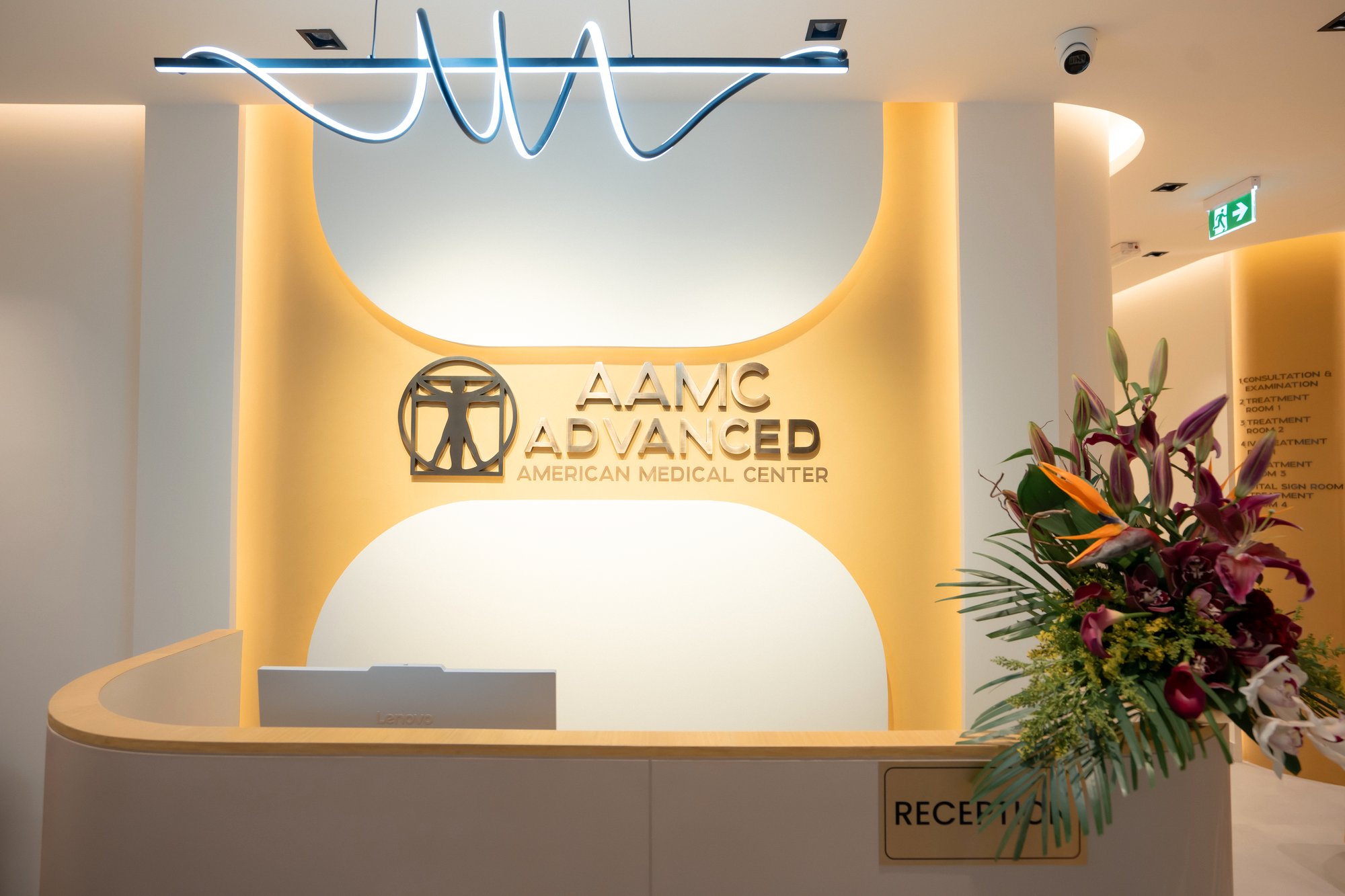
Reception at AAMC Polyclinic in Business Bay, Dubai
CallWhatsAppBook